
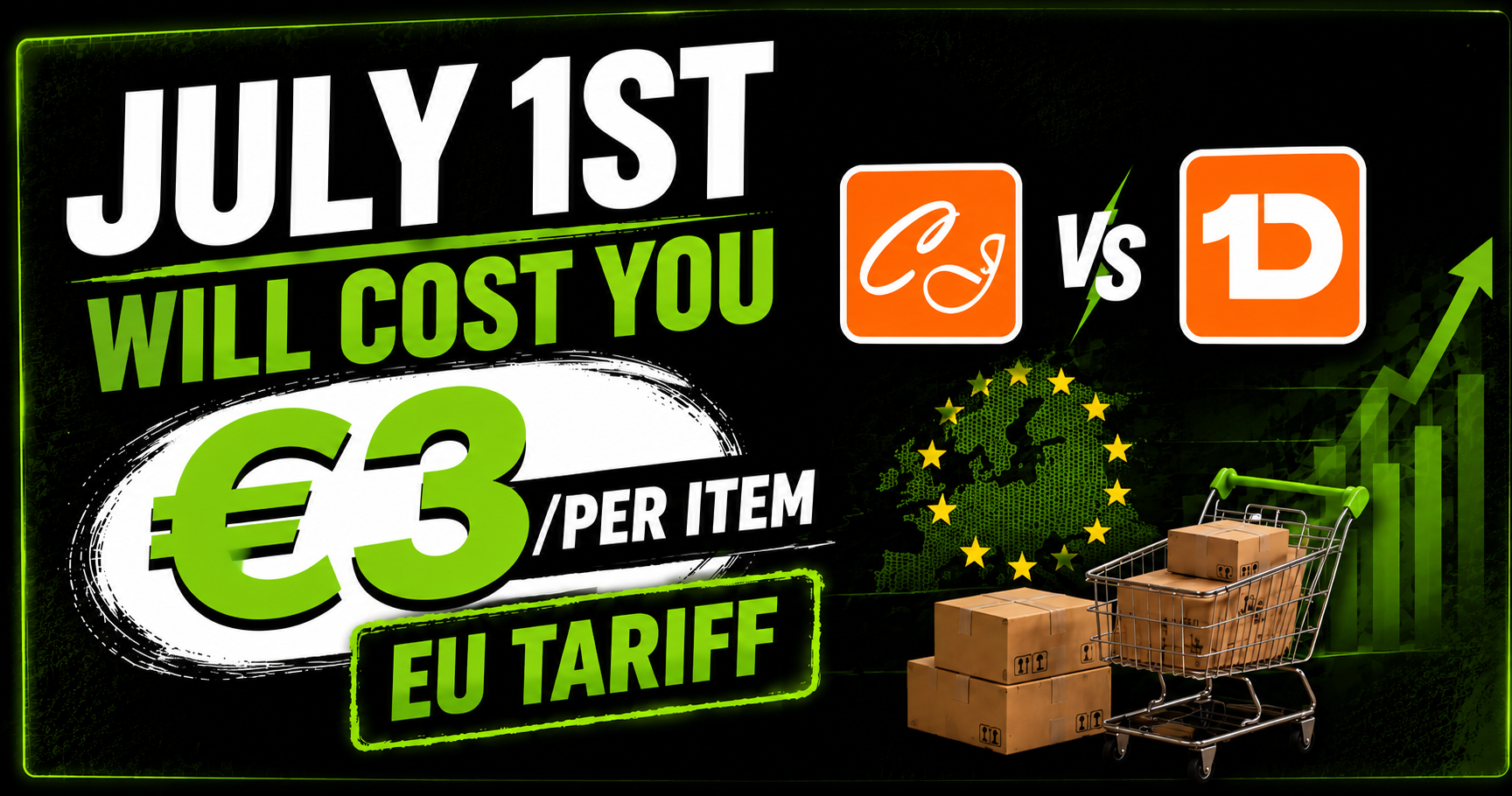
EU Tariff Update: What eCommerce Brands Need to Know Before July 1, 2026
A major change is coming for eCommerce businesses selling into Europe.
Starting July 1, 2026, the European Union will introduce a new customs duty on low-value imports entering the EU from outside the bloc. According to the European Commission, the reform is expected to affect approximately 93% of all eCommerce imports into Europe.
What Is Changing?
The EU has confirmed a new €3 customs duty that will apply to low-value imports entering the European Union. The measure is designed to simplify customs processing while addressing the growing volume of cross-border eCommerce shipments.
For merchants selling products sourced outside Europe, this means additional costs may be introduced into the fulfillment process depending on the products being shipped and how logistics providers choose to implement the new rules.
Why Are Merchants Confused?
Since the announcement, different logistics and fulfillment providers have communicated the impact of the duty in different ways.
For example, CJ Dropshipping has announced new tax-inclusive shipping solutions and estimates that merchants may see an additional cost of approximately €2 to €3 per parcel depending on the shipping method used.
DayONE on the other hand, has communicated that merchants should expect a €3 charge per item under the new system.
While both companies are discussing the same EU reform, their approaches to handling the additional cost differ significantly.
What Does This Mean for Shopify and eCommerce Brands?
If you sell products into European markets, now is the time to review your business model.
• Product pricing
• Shipping costs
• Average order value (AOV)
• Product bundles
• Profit margins
• Google Ads and Meta Ads profitability
Even a small increase in landed costs can significantly impact profitability when scaled across hundreds or thousands of orders.
Preparing for July 2026
The most successful brands will not wait until the regulation goes live.
Merchants should proactively review their fulfillment strategy, communicate with their suppliers, and understand how their logistics partners plan to handle the new EU duty.
Whether you're working with CJ Dropshipping, DayONE, or another fulfillment provider, understanding the real impact on your margins will be critical for maintaining profitable growth in European markets.
Final Thoughts
The EU tariff reform represents one of the most significant cross-border eCommerce changes in recent years. While the exact cost impact may vary depending on your supplier and shipping setup, every merchant selling into Europe should be preparing now.
If you're unsure how your supplier is handling the new EU duty, reach out to them directly and request clarification before July 1, 2026.